Investing In Durable Rope Sheaves For Industrial Buyers
When you’re responsible for keeping a crane, hoist, or material handling system running reliably, the components you choose directly affect both safety and operating cost. Wire rope sheaves sit at the center of that equation. They guide the rope, absorb load, and determine how quickly your wire rope wears out. A poor choice here doesn’t just mean an early replacement; it can mean damaged rope, unplanned downtime, or a dropped load.
Investing in durable rope sheaves is one of the most cost-effective decisions you can make for any lifting and rigging or material handling equipment system. The upfront cost of a precision-engineered sheave is almost always recovered through reduced rope consumption, fewer maintenance cycles, and longer service intervals. The challenge is knowing what separates a genuinely durable sheave from one that simply looks the part on a spec sheet.
This guide is written for buyers, maintenance managers, and rigging professionals who need to make informed decisions. You will find practical guidance on groove geometry, material selection, bearing design, corrosion resistance, and supplier evaluation, with a focus on Bear Equipment and other North American sources that can realistically support your operations.
What Makes A Sheave Worth The Investment
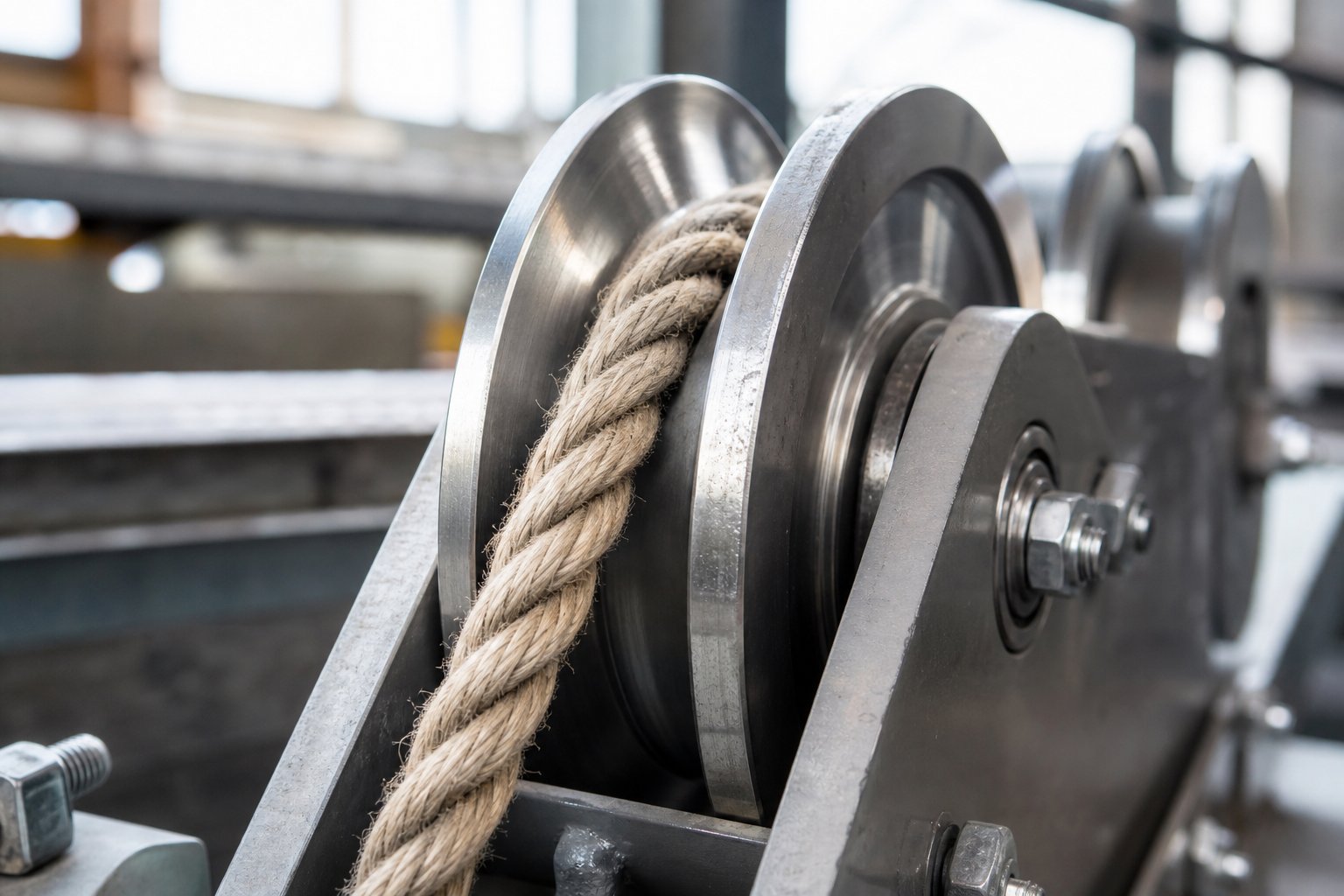
Not every sheave rated for the right load is actually worth buying. The difference between a durable sheave and a marginal one comes down to groove geometry, load rating honesty, and whether the design holds up across its full expected service life rather than just on paper.
How Groove Geometry Protects Wire Rope
The groove profile is the first thing to evaluate in any wire rope sheave. A properly sized groove supports the rope around its full circumference, distributing contact stress evenly. If the groove is too narrow, it pinches the rope and accelerates wire fatigue. If it is too wide, the rope flattens under load and loses structural integrity faster.
Grooved sheaves designed to match specific wire rope diameters and constructions perform significantly better than generic alternatives. As a practical rule, the groove radius should be slightly larger than the rope radius, typically 5 to 10 percent, to allow for rope movement without edge contact. This small detail has a large impact on rope service life.
Why Load Rating And Service Conditions Matter
A sheave’s rated load capacity must reflect actual operating conditions, not just static load. Dynamic loading, shock loading, and acceleration forces in lifting equipment often exceed the nominal load by a significant margin. You need sheaves rated with appropriate safety factors for the specific duty cycle in your application.
Service conditions such as temperature range, exposure to abrasives, moisture, and cycle frequency all affect how a sheave performs over time. A single sheave rated for light intermittent use will fail prematurely in a continuous-duty hoist environment. Matching the sheave specification to the real operating environment is non-negotiable.
The Difference Between Upfront Price And Lifecycle Value
Low-maintenance sheaves with precision bearings and hardened grooves cost more at purchase. Over a full service cycle, they almost always cost less. Frequent sheave replacements also accelerate wire rope wear, meaning you pay twice for each substandard component.
Research on the wire rope sheaves market confirms that demand for high-performance sheaves is growing specifically because end users are prioritizing components that reduce wear on ropes and extend equipment service intervals. That shift reflects practical experience across construction, mining, and industrial lifting operations.
Materials And Design Choices That Drive Durability
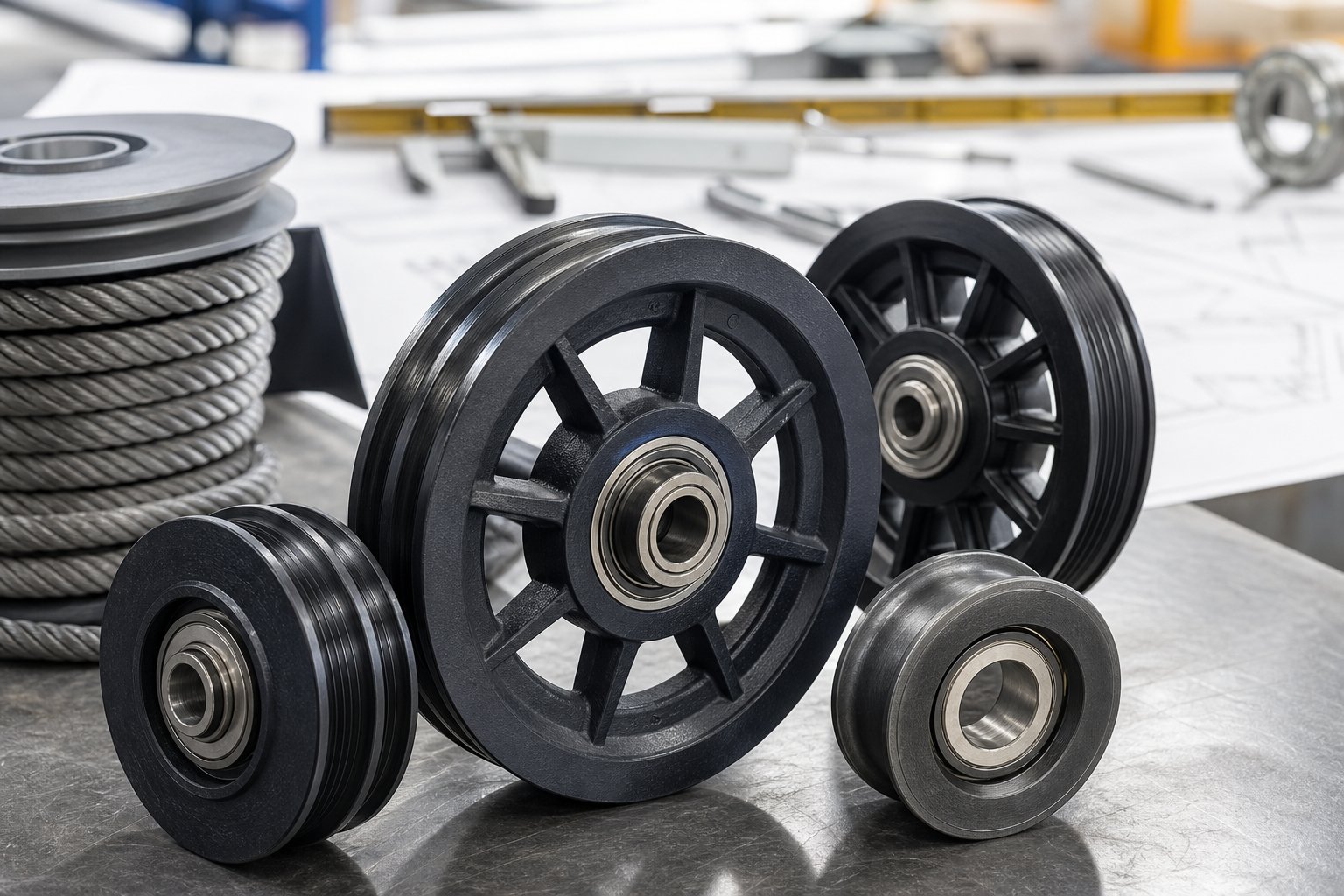
Material selection and design features such as bearing type, surface treatments, and groove linings determine how a sheave holds up under load, in harsh environments, and across extended service intervals. Custom sheaves and corrosion-resistant sheaves address needs that standard off-the-shelf options often cannot.
When Steel, Cast Iron, Aluminum, And Polymers Make Sense
Steel sheaves are the default choice for heavy-duty lifting and high-load applications. They offer the best combination of strength, wear resistance, and dimensional stability under load. Machined steel sheaves deliver tighter groove tolerances than cast alternatives, which matters when rope precision is critical.
Cast iron sheaves remain common in moderate-load applications where cost is a priority and shock loading is limited. They are brittle under impact, so environments with dynamic or sudden loads are not well suited to cast iron.
Aluminum sheaves reduce weight in mobile or elevated systems without sacrificing meaningful strength for lighter rope loads. Polymer sheaves and wear-resistant plastic rims, including cast nylon and similar engineered materials, offer genuine advantages in corrosion resistance and reduced rope wear. As noted in Nylatech’s design guidance on nylon sheaves, materials like Cast Nylon-6 provide durability and performance that work well in lower-abrasion, corrosion-prone environments. Hybrid sheaves, which combine polymer rims with steel hubs, deliver the benefits of both.
The Role Of Bearings, Linings, And Surface Treatments
Self-lubricating bearings reduce maintenance requirements significantly, especially in remote or hard-to-access installations. Sealed bearings resist contamination from grit, water, and process debris that would otherwise shorten bearing life.
Zinc plating adds corrosion resistance at low cost for moderate environments. Teflon lining and similar coatings in the groove reduce friction and protect rope surface contact, particularly in applications where rope speed is high. Subsea sheaves require more aggressive corrosion protection, including stainless steel construction or specialized coatings, because standard surface treatments are inadequate at depth or in splash zones.
How Custom Configurations Improve Application Fit
Standard sheave dimensions may not match your rope diameter, fleet angle, or mounting configuration. Custom sheaves machined to your specific groove profile, bore size, and flange geometry eliminate the compromise of forcing a standard part into a non-standard application. Esheaves.com notes that proper material selection combined with custom engineering directly affects strength, durability, and overall performance in demanding applications. For OEM systems, crane rebuilds, and specialized rigging, custom configurations are often the most cost-effective long-term choice.
Best-Fit Applications Across Industrial Use Cases

Wire rope sheaves serve a wide range of industries, and the right sheave for one environment is rarely the right choice for another. Load type, duty cycle, exposure conditions, and rope construction all vary enough across applications to make application-specific selection essential.
Construction, Cranes, And General Material Handling
Construction sites and crane operations represent the broadest use case for wire rope sheaves in material handling equipment. Tower cranes, mobile cranes, and overhead bridge cranes all rely on sheaves to redirect wire rope through block and tackle systems under continuous or semi-continuous load.
In these settings, steel sheaves with machined grooves and sealed bearings are standard. The key selection criteria are load rating, groove profile matched to the rope construction, and resistance to grit and dust contamination. Replacing sheaves on schedule rather than waiting for visible wear is a reliable way to protect the wire rope investment in crane systems.
Mining, Marine, Offshore, And Corrosive Environments
Mining and marine environments put heavier demands on sheave materials and surface protection than most other applications. Subsea sheaves used in offshore lifting face saltwater immersion, pressure, and biological fouling, requiring stainless steel construction or purpose-engineered corrosion-resistant sheaves.
Marine deck equipment, ship winches, and floating crane systems operate in splash zones where zinc plating is insufficient. Subsea and marine-rated sheaves must meet stricter design and material standards than their inland counterparts. For Canadian operations in coastal British Columbia or offshore Atlantic Canada, selecting sheaves rated specifically for marine environments is a practical necessity, not an option.
Automation, Hoisting, And Specialized OEM Systems
Automated hoisting systems place different stresses on sheaves than manual or intermittent-duty equipment. Continuous cycling, precise rope positioning, and integration with sensor or feedback systems require sheaves with tighter tolerances, consistent groove geometry, and predictable wear characteristics.
OEM equipment manufacturers increasingly specify custom sheaves for this reason. The wire rope sheaves market by application reflects steady growth in automation-driven demand as manufacturers move toward more precisely controlled material handling systems.
How To Evaluate Suppliers In The United States And Canada

Choosing the right sheave supplier matters as much as choosing the right sheave. Technical capability, inventory depth, lead times, and application knowledge all affect whether a supplier can actually support your operations when you need it most.
What Industrial Buyers Should Ask Before Ordering
Before placing an order with any sheave supplier, you should be able to get clear answers to these questions:
- What groove profiles and rope diameter ranges do you stock or manufacture?
- What load ratings and safety factors apply to your products in dynamic duty applications?
- Can you provide custom machining to match our specific bore, flange, or groove geometry?
- What certifications or material traceability documentation comes with the product?
- What are your standard lead times, and what can you do for expedited orders?
A supplier that cannot answer these clearly likely lacks the technical depth to support lifting and rigging applications reliably. Documentation matters in regulated industries, and traceability to material standards protects you if a component is ever questioned in an incident review.
Why North American Support And Availability Matter
Lead times and local availability are practical factors that affect real operations. Sheave suppliers based in North America, or with strong North American distribution, can respond faster to urgent replacement needs than overseas-only sources.
The North American sheave market includes well-established names. The Crosby Group is widely known for lifting and rigging components including sheave blocks used across crane and industrial applications. Mazzella Companies and Bishop Lifting operate as full-service lifting product distributors. Certex, Suncor Stainless, and Carl Stahl serve specific segments including wire rope hardware and marine-grade components. Columbus McKinnon, Konecranes, and Liebherr produce complete lifting systems where sheave selection is integrated into the broader equipment design. Martin Sprocket & Gear and Gates Corporation address power transmission and sheave applications in industrial drive systems. Congress Drives and Electrolift serve hoisting and material handling niches with sheave and block products. Loos & Co and Bairstow Lifting Products also supply wire rope and rigging hardware to industrial buyers across North America.
How Bear Equipment Compares In A Crowded Supplier Field
Bear Equipment, based in Louisiana, has manufactured custom and standard wire rope sheaves since 1982. According to Metoree’s manufacturer directory, Bear Equipment produces sheaves in steel, aluminum, stainless steel, and nylon, precision machined to strict tolerances.
What separates Bear Equipment from general industrial distributors is manufacturing depth. You can order a standard sheave from stock or specify a custom groove profile, bore diameter, and material combination for your exact application. That flexibility matters for buyers dealing with older crane systems, OEM replacement needs, or specialized rigging setups where standard catalog parts do not fit cleanly. For North American buyers who need responsive service and a supplier that understands lifting and rigging requirements rather than just fulfilling catalog orders, Bear Equipment is a credible and practical choice.
Market Signals Shaping Buyer Decisions

Market trends in the wire rope sheaves space do not drive individual purchasing decisions directly, but they do tell you where product development is heading, which suppliers are investing in capability, and what replacement and upgrade cycles look like across your industry.
Where Demand Is Growing And Why It Matters
The global wire rope sheaves market was valued at approximately USD 985.5 million in 2025 and is projected to reach USD 1.35 billion by 2032, growing at a CAGR of 4.7%. A separate estimate from GII Research puts the market at USD 3.6 billion by 2030, reflecting different scope definitions across research methodologies.
Regardless of the specific figures, growth is concentrated in construction, mining, and maritime sectors, driven by infrastructure investment, offshore energy development, and expanded automation in manufacturing. For buyers, this means sheave manufacturers are actively developing new products, which improves availability of higher-quality options over time.
Product Trends Influencing Replacement And Upgrade Cycles
The push toward high-performance sheaves with longer service intervals is a practical response to labor costs and downtime pressure. Sheave manufacturing is moving toward tighter groove tolerances, better bearing integration, and more application-specific material configurations.
Polymer and hybrid sheave designs are gaining acceptance in applications where steel was previously the only consideration. Companies like Changzhou Baoxin and Creaglobe serve global manufacturing and OEM markets with competitively priced sheave products, while suppliers such as Duotone address specialized performance applications. For North American buyers, these shifts mean more product choices but also a greater need for careful evaluation, since not all sheaves marketed as high-performance are built to the same standard.
What The Competitive Landscape Suggests For Buyers
A crowded supplier market benefits buyers who know what they need. Price competition among sheave manufacturers has made decent-quality standard sheaves more accessible, but it has also flooded the market with products that meet minimum specifications without delivering reliable service life.
The most useful signal from the competitive landscape is this: suppliers investing in custom manufacturing capability, application engineering support, and material traceability are the ones worth building long-term sourcing relationships with. As the sheaves market continues expanding, the buyers who perform consistent supplier evaluation and prioritize lifecycle cost over purchase price will get the most value from the available options.